
Uganda's AI Ambition: What Will It Take to Become Africa's AI Hub?
Uganda's ambition to become Africa's AI hub presents an opportunity to transform its digital economy. But beyond investment and data centres, success will depend on reliable infrastructure, skilled people, strong data systems and businesses ready to turn artificial intelligence into measurable economic value.
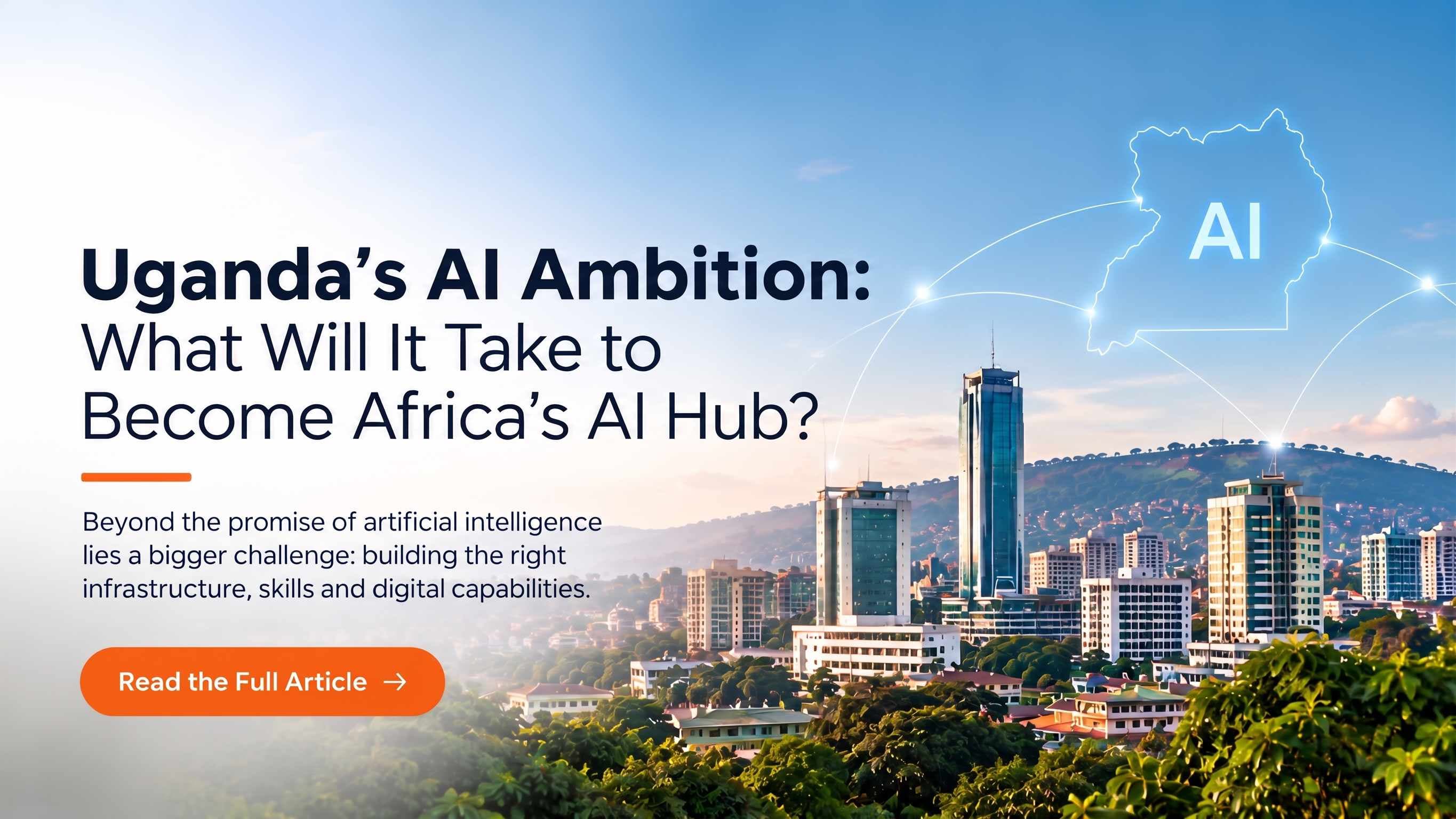
Uganda is positioning itself for a bigger role in Africa's emerging artificial intelligence (AI) economy. Recent discussions between President Yoweri Museveni and Mehamood Hosein, founder and chairman of HIVE Global Group, have brought renewed attention to proposals for establishing HIVE Uganda and a Global AI Village.
The ambition is significant: to strengthen Uganda's position in the global AI landscape, attract technology investment and create opportunities for developing and exporting AI-powered services.
But becoming an AI hub requires not just ambition and investment. It requires the infrastructure, skills, data systems and business capabilities to support an entire technology ecosystem.
The question we need to ask is whether it can build an environment where AI can be developed, adopted and translated into economic value.
AI is bigger than data centres
Data centres and computing infrastructure are essential to artificial intelligence. However, they are only part of the equation.
AI systems depend on reliable electricity, high-speed connectivity, secure data storage and sufficient computing capacity. They also require cloud infrastructure that allows organisations to access and manage computing resources efficiently.
These components must work together.
Without reliable power, even advanced computing facilities face operational challenges. Without adequate connectivity, access to AI services becomes difficult. And without secure, well-managed data, organisations cannot fully benefit from intelligent systems.
For Uganda, this means that investment in AI must go hand in hand with broader digital infrastructure development.
Data will determine how far AI can go
Artificial intelligence is only as useful as the data supporting it.
Businesses and institutions often operate with information spread across disconnected systems, inconsistent records and processes that still depend heavily on manual administration.
This creates a significant challenge for AI adoption.
Uganda's National Data Strategy recognises the importance of strengthening data governance, infrastructure and the strategic use of data. These foundations are important not only for government institutions but also for businesses seeking to make better decisions and adopt emerging technologies.
Organisations that invest in structured, accessible and secure data systems will be better positioned to integrate AI into their operations.
Turning AI infrastructure into business opportunities
While national investment can create the foundations for an AI ecosystem, businesses will ultimately determine how much economic value is generated from it.
AI offers opportunities to improve operational efficiency, automate repetitive tasks, analyse information and support better decision-making.
Connected technologies are also expanding these possibilities. Through Artificial Intelligence of Things (AIoT), organisations can connect physical devices, sensors and equipment to intelligent systems that monitor operations, identify patterns and support timely interventions.
Cloud engineering provides the infrastructure to manage these systems, while integrated enterprise resource planning (ERP) platforms help organisations connect information and streamline business processes.
These are not distant possibilities reserved for large technology companies. They represent practical opportunities for organisations across manufacturing, logistics, agriculture, healthcare and other sectors.
The challenge is ensuring that businesses have the systems, skills and digital foundations to adopt these technologies effectively.
The challenges Uganda must address
Uganda's AI ambitions also come with important considerations.
Reliable and affordable electricity, quality internet connectivity, investment in computing infrastructure and access to specialised technical skills will all influence the country's ability to compete.
Cybersecurity, data protection and responsible AI governance are equally important. As organisations increasingly rely on automated systems and data-driven decisions, protecting information and maintaining accountability must remain central to technology adoption.
There is also the question of accessibility. An AI ecosystem should create opportunities beyond major technology centres, allowing local businesses, innovators, researchers and communities to participate in its development.
These challenges do not diminish Uganda's ambition. Rather, they highlight the work required to turn that ambition into sustainable progress.
The private sector has a role to play
The development of a national AI ecosystem should not be left to government and international technology investors alone.
Local technology companies, businesses, educational institutions and entrepreneurs all have a role in shaping how AI is adopted and applied.
Businesses, in particular, do not need to wait for large-scale AI infrastructure projects to become operational before preparing for this shift.
They can begin by improving data management, strengthening cloud infrastructure, integrating business systems and identifying processes where automation and intelligent technologies can deliver measurable value.
Building these foundations today will make organisations better prepared to take advantage of tomorrow's opportunities.
From AI ambition to measurable impact
Uganda's ambition to become an AI hub presents an important opportunity to participate more meaningfully in the global digital economy.
However, the success of this ambition should not be measured only by the number of data centres established, investments announced or technology partnerships signed.
It should also be measured by the capabilities created, businesses transformed, skills developed and locally relevant solutions brought to market.
Ultimately, the real value of an AI hub lies not simply in the technology it hosts, but in what people, businesses and institutions are able to achieve through it.
Uganda has an opportunity to build more than an AI destination. It can help shape an ecosystem where technology drives productivity, strengthens enterprise and creates new economic opportunities.
The foundations built today will determine how much of that opportunity the country can realise.
Sources
State House Uganda - Original announcement of the HIVE Uganda and Global AI Village proposal.
Ministry of ICT - Uganda's official strategies and frameworks.
Daily Monitor - Details of the National Data Strategy and its implications for AI readiness.
NITA-U - Uganda's data centre infrastructure planning.
ITU – Uganda National AI Landscape Assessment - Baseline assessment of Uganda's AI ecosystem, capabilities and readiness.